Summary
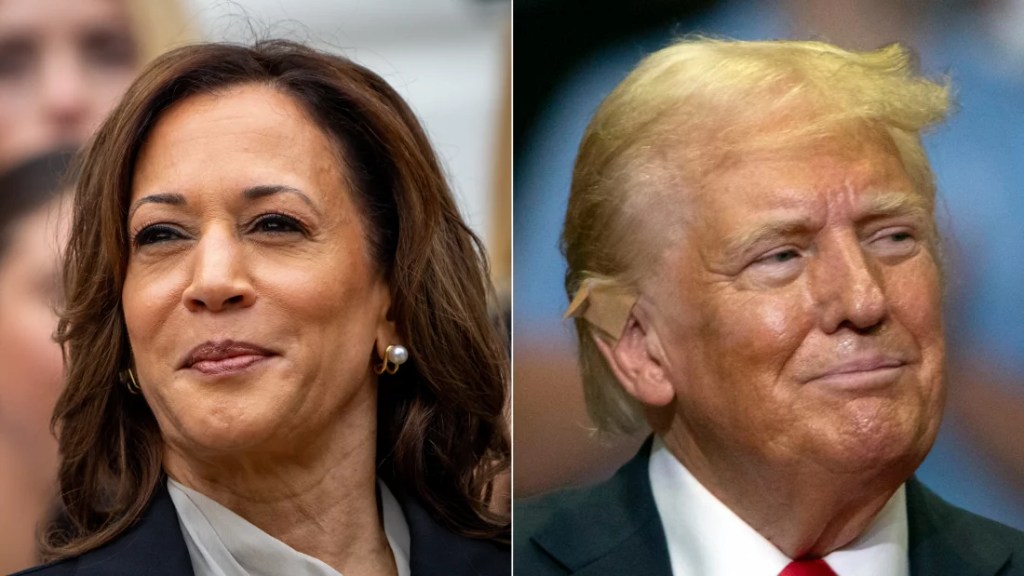
- The 2024 U.S. presidential election could reshape U.S.-China relations, with Harris favoring “de-risking” and Trump pushing for full economic decoupling.
- Harris supports supply chain diversification and renewable cooperation, while Trump plans to revoke China’s trade status and eliminate critical imports.
- Both candidates’ policies could strain U.S.-China business ties and raise consumer costs, with Trump’s approach having immediate economic effects.
Introduction
The results of the 2024 U.S. presidential election will be, no matter the outcome, historic. Due to the unprecedented nature of the candidates’ campaigns and the issues at stake for American voters, this election cycle is poised to have a meaningful impact on American society.
In this election, there is also much at stake for countries around the world, particularly China. Harris and Trump likely agree on how Washington should manage its relationship with Beijing going forward, including implementing economic sanctions,trade tariffs, and export controls; continuing to promote a free and open Indo Pacific and protecting the rule of law and international order; promoting collaboration with Beijing on counternarcotics and non-proliferation initiatives; and encouraging key U.S. allies to implement similar strategies, among others. That said, there are some key differences in their approach to China, as well as key differences in how Beijing will respond to the administrations.
U.S. – China Relations under a Harris Administration
One of the key differences between Trump and Harris in their approaches to China is the aggressiveness of their plans. Vice President Harris argues that the U.S. should “de-risk,” not decouple, from China, by diversifying the supply chains of critical U.S. goods (e.g., further subsidizing domestic manufacturing of semiconductors and EV components). Harris has also placed a greater emphasis on cooperating with China to increase global renewable energy capacity. On Taiwan, it appears that Harris’s approach will have much more in common with Biden’s than it does with Trump’s.
While Xi Jinping has not expressed preference for either candidate, Chinese officials seem to prefer a Harris administration, viewing Kamala Harris’ proposed approach as “more manageable,” albeit not necessarily favorable to China.
U.S. – China Relations under Trump 2.0
Former President Trump’s plan involves a much more aggressive stance towards China in the short term. In particular, “President Trump’s America First trade policy will completely eliminate U.S. dependence on China,” according to the campaign’s Agenda 47 Manifesto. He said that he would “revoke China’s Most Favored Nation trade status and adopt a 4-year plan to phase out all Chinese imports of essential goods.” On Taiwan, Trump has said that the island should pay for U.S. protection from China.
During his Administration, Trump, for his part, did foster a close relationship with Xi Jinping, and their relationship continues to be well-maintained. Nevertheless, a Trump Administration would be far more mercurial and far less predictable for Beijing than a Harris Administration.
Implications for the U.S.
- U.S. Policy Implications
America’s foreign policy approach to China hinge’s significantly on the results of the 2024 Presidential Election. If Trump wins a second term, Washington’s policymakers will likely have their work cut out for them when it comes to finding common ground or opportunities to make any kind of progress with their Beijing counterparts. If Harris is elected, China may be more amenable to working with the U.S.
In either scenario, U.S. policy toward China will continue to become more stringent as China continues to increase its global reach and Xi Jinping’s ambition continues to grow.
- U.S. Business Implications
For American businesses, regardless of the results of the election, operating in China will become increasingly financially prohibitive. Increased export controls and trade tariffs will continue to shift production domestically, and American corporations’ customers will also likely continue to shift towards Western countries.
- U.S. Consumer Implications
The implications for American consumers of the U.S.-China relationship under Trump vs. Harris could be significantly different. Trump appears positioned to take a more aggressive stance in the near term towards China, while Harris appears interested in coordinating more intentionally with U.S. allies against China in the longer term. Trump’s approach would likely put more pressure on the U.S. economy — not to mention the global economy — in the near future, pushing prices up on American goods as supply falls due to American decoupling from China under Trump, whereas Harris’ plan likely shifts some of the economic impact into the future.
Photo Credit: Andrew Harnik/Getty Images; Bill Pugliano/Getty Images

 Sino Strategies: China's Influence & its Implications for the U.S.
Leave a comment