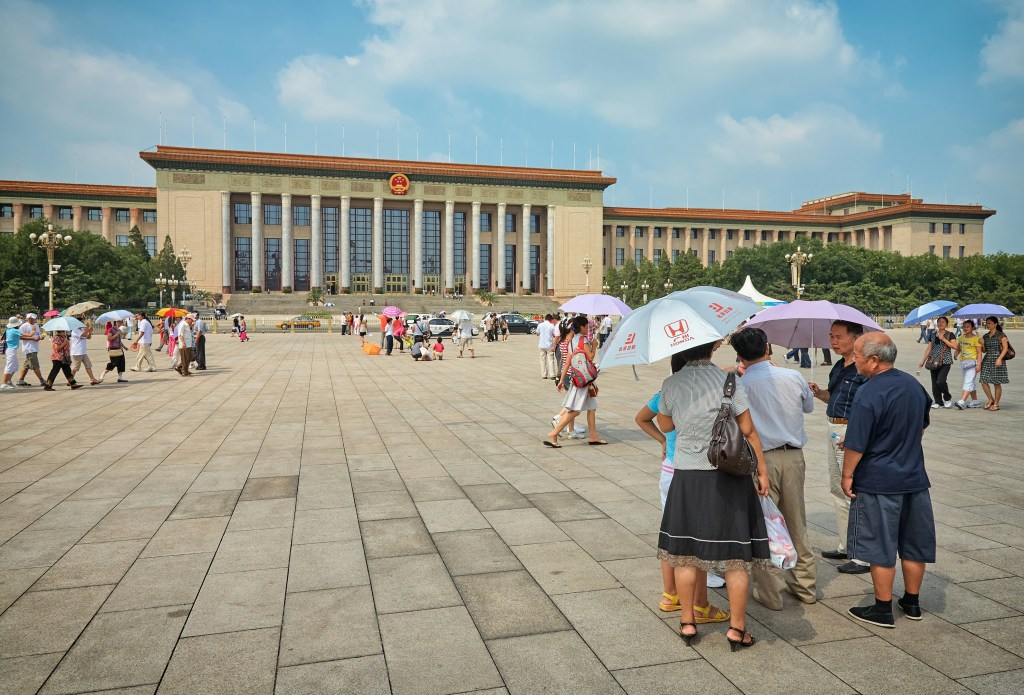
Throughout the week beginning March 4, Chinese parliamentary leaders gathered at political meetings during an annual convention referred to as the Two Sessions. The Two Sessions correspond to the simultaneous meetings of the National Committee of the Chinese People’s Political Consultative Conference (CPPCC), the top political advisory body in China, and the National People’s Congress (NPC), China’s unicameral legislature.
The primary output of the Two Sessions is the Governing Work Report (GWP), a document that showcases the nation’s accomplishments from the past year and plans for the upcoming year. The economic targets for 2024 described in the report were largely unsurprising and include a GDP growth target of around 5 percent – identical to last year’s goal – and the creation of 12 million urban jobs. Other outcomes from this year’s Two Sessions include an approved budget with increased defense spending by more than 7% and a revision to a State Council law directing the NPC to follow Xi’s vision.
The Two Sessions’s lack of significance
In theory, the legislative bodies that convene for the Two Sessions can influence state laws and elect major officials, among other powers and functions. However, in practice the NPC does not generally exert these powers, as major decisions and appointments are made by the CCP. Furthermore, the Two Sessions meetings have become more ceremonial than anything, serving as an opportunity for China’s legislators to grant virtually automatic approval and express enthusiastic support of the President’s political and economic agenda. This year’s Two Sessions were remarkable because they did not feature a closing news conference from the Premier, Li Qiang, thereby breaking with decades of tradition, closing another channel of information for the outside world, and further highlighting that China continues to become politically streamlined under Xi Jinping.
Implications for the U.S.
- U.S. Policy Implications
It is clear from the GWP that China remains concerned about national security, as the report highlights consolidation of the foundations for secure development – including grain output, energy and resource supplies, infrastructure modernization, and supply chain risk management – as a key accomplishment. U.S. policymakers may consider promoting American economic and political interests in the region by utilizing this fact to their advantage. Policymakers may consider, for instance, working with ASEAN countries to develop business incentives and manufacturing subsidies to encourage more economic activity outside of China. They may also consider offering agricultural support contingent upon Beijing’s adherence to the rules of law and international order.
Moreover, China’s approved budget and increased defense spending indicate potentially hawkish foreign policy decisions coming out of Beijing over the course of the next year. Coming off the heels of Taiwan’s elections earlier this year, and specifically the inauguration of pro-independence leader Lai Ching-te as President, the U.S. may consider strengthening its military and political stance in the East China Sea.
- U.S. Business Implications
The accomplishments described in the GWP include progress in developing a modernized industrial system, scientific and technological innovation in emerging critical areas, and adoption policies to spur the growth of the private sector. Indeed, industrial support was the top-ranked item on Beijing’s priority list for the year ahead. American businesses, especially in advanced industries or manufacturing-based industries, may consider – with sufficient due diligence and understanding of the legal aspects of China’s business landscape – launching or expanding their footprint in the Chinese market this year and taking advantage of these planned industrial investments.
- U.S. Consumer Implications
The announcements coming out of the Two Sessions could impact financial securities and markets – and, in some geographies, already have. Other significant announcements or policy shifts generated as a result of the Two Sessions could influence global financial markets, including in the U.S. Consumers, especially those with foreign investments or interest in Asian markets, may see their financial position change as a result of the Two Sessions’s output.
 Sino Strategies: China's Influence & its Implications for the U.S.
Leave a comment